
Preflight Inspection Checklist: A Practical GA Guide
A preflight inspection checklist is a structured, task-by-task list that pilots and flight personnel complete before every flight to verify aircraft airworthiness, confirm regulatory compliance, and catch anything that could compromise safety. Under FAR 91.103, pilots are required to familiarize themselves with all available information concerning the flight before departure - and the checklist is the primary tool that makes that requirement actionable. Skipping steps or relying on memory instead of a written checklist is one of the most consistent contributors to preflight-related accidents, according to NTSB safety data. For international operations, FAA Form 7233-4 is the official Pre-Flight Pilot Checklist and International Flight Plan; check the FAA forms library for the current edition before you file.
Key reasons every GA pilot needs a consistent aircraft preflight checklist:
- Catches mechanical issues before they become in-flight emergencies
- Confirms required ARROW documents are onboard and current
- Verifies fuel grade, quantity, and contamination status
- Ensures control surfaces, avionics, and lighting are functional
- Creates a repeatable, defensible record of pre-departure due diligence
Table of Contents
- What does a complete preflight inspection checklist cover?
- Understanding the ARROW documents and FAA requirements
- How to improve your preflight checklist beyond the manufacturer’s standard
- How long does a preflight inspection take, and how should you prepare?
- Post-inspection documentation and reporting
- Legal responsibilities and liabilities for preflight inspections
- SquawkFree keeps your preflight prep current and compliant
- Key Takeaways
What does a complete preflight inspection checklist cover?
A well-organized GA preflight checklist moves through the aircraft in a logical sequence, typically starting with required documents, then the cockpit, then the exterior walkaround, and finishing with engine run-up checks. Each segment targets a specific system or area, so nothing gets buried or accidentally skipped.
| Checklist Segment | Typical Tasks |
|---|---|
| Required Documents (ARROW) | Verify airworthiness certificate, registration, operating handbook, weight and balance data |
| Cockpit / Interior | Master switch, avionics, instruments, seats, harnesses, emergency equipment |
| Exterior Walkaround | Fuselage, control surfaces, landing gear, lights, antennas, pitot tube |
| Fuel and Oil | Fuel grade (100LL for piston engines), quantity, sump drains for water, oil level |
| Engine Compartment | Cowling security, fluid leaks, exhaust, prop condition |
| Engine Run-Up | Magneto check, carb heat, vacuum, engine instruments |
The sequence differs by aircraft type. A single-engine Cessna 172 walkaround takes a predictable path around the airframe; a multi-engine Piper Seneca adds propeller feathering checks and individual engine run-up steps. Helicopter preflight checklists introduce rotor blade inspection, tail rotor condition, and hydraulic system verification - items that simply don’t exist on a fixed-wing list. Regardless of aircraft type, fuel inspection protocol requires confirming proper fuel grade, checking quantity against planned fuel burn, and draining sumps to rule out water or contamination.
Physical inspection goes beyond looking. Using your hands to feel for loose fittings and listening for unusual sounds during engine run-up can surface problems that a purely visual scan misses, per FAA advanced inspection guidance.
Understanding the ARROW documents and FAA requirements
The ARROW acronym defines the five documents that must be onboard for any legal flight in the United States:
- A - Airworthiness certificate (must be displayed in the aircraft)
- R - Registration certificate (must be current and match the aircraft)
- R - Radio station license (required for international operations)
- O - Operating handbook or FAA-approved flight manual (POH/AFM)
- W - Weight and balance data (current and specific to the aircraft’s configuration)
Missing or outdated documents can ground an aircraft regardless of its mechanical condition. An expired registration or a weight and balance document that doesn’t reflect a recent modification makes the aircraft legally unairworthy, even if every system checks out perfectly.
Steps to verify ARROW compliance during every preflight:
- Locate and visually confirm the airworthiness certificate is displayed in the cockpit
- Check the registration expiration date and confirm the N-number matches the aircraft
- Confirm the POH or AFM is the correct edition for the aircraft’s serial number
- Verify weight and balance reflects any installed modifications or STC equipment
- For international flights, confirm the radio station license is current and onboard
Pro Tip: Keep a laminated ARROW checklist inside the document pouch. If any item is missing or expired, the flight doesn’t happen - no exceptions.
How to improve your preflight checklist beyond the manufacturer’s standard
Complacency is the most predictable threat to preflight thoroughness. The NTSB has documented that relying on memory rather than a written checklist is a leading cause of preflight errors. The fix isn’t just using a checklist - it’s using the right checklist and protecting your focus while you work through it.
The FAA’s Advanced Preflight approach takes the standard manufacturer’s checklist and layers in aircraft-specific intelligence. By reviewing maintenance logs before the walkaround, you can build an additional items checklist that targets known recurring issues, recent repairs, and applicable Airworthiness Directives for your specific aircraft. If your aircraft had a recurring AD on a seat locking mechanism, for example, that item belongs on your personal checklist - not just in the maintenance log.
Segmented checklists divide the inspection into logical blocks so you can pause for an ATC call or a passenger question and resume exactly where you left off without losing your place. Linear checklists don’t offer that resilience.
Practical steps to build a stronger flight readiness checklist:
- Pull maintenance logs before every preflight and note any recent work or open items
- Cross-reference applicable ADs and confirm compliance dates against current tach/Hobbs time
- Add a personal items block: survival gear, first aid kit, flashlight, over-water equipment if applicable
- Ask bystanders and passengers to hold questions until you’ve completed the walkaround
- Use digital tools that integrate maintenance history directly into your preflight workflow
Digitizing maintenance records and connecting them to your preflight checklist eliminates the manual cross-referencing step. Platforms built for GA, like SquawkFree, automate AD tracking and logbook digitization so the information you need is current and accessible before you ever reach the aircraft.
How long does a preflight inspection take, and how should you prepare?
A standard preflight inspection takes between 15 minutes and under an hour, depending on aircraft complexity and pilot thoroughness. Simple aircraft typically require less time, while complex types may take closer to an hour.
Environmental factors shape what you’re looking for. Frost on control surfaces requires a complete removal before flight - not just a visual check. Poor lighting makes it easy to miss a fluid leak or a cracked lens. High-density-altitude airports add urgency to fuel and weight calculations. Ramp debris after a storm means an extra pass around the landing gear.
Preparation steps before you reach the aircraft:
- Review METARs, TAFs, and NOTAMs for your route
- Confirm scheduled maintenance is current (annual, 100-hour, IFR tests)
- Verify fuel type on order matches your aircraft’s requirement (100LL vs. Jet-A)
- Check personal readiness: rest, currency, medical certificate validity
- Set up your digital checklist app or print a current paper checklist
Pro Tip: Build your preflight into your departure timeline as a fixed block, not a variable one. Rushing a walkaround because you’re late is exactly when things get missed.
Post-inspection documentation and reporting
After completing the walkaround, document what you found - not just what was wrong. Logging a clean preflight is as important as logging a discrepancy, because it establishes a baseline and creates a defensible record if questions arise later.
If you find a discrepancy, the aircraft stays on the ground until a certificated Aviation Maintenance Technician (AMT) clears it. Write the squawk in the aircraft’s maintenance log with enough detail for the AMT to reproduce and diagnose the issue. Vague entries like “engine rough” are less useful than “rough idle at 1,000 RPM, smoothed above 1,500 RPM, magneto drop within limits.” After the AMT signs off the repair, confirm the logbook entry is complete before the next flight.
For flight schools and clubs, post-inspection reporting feeds directly into scheduling and dispatch decisions. A digital platform that captures squawks and links them to maintenance records keeps the whole operation informed in real time.
Legal responsibilities and liabilities for preflight inspections
The pilot in command (PIC) bears full legal responsibility for determining that the aircraft is airworthy before flight, under 14 CFR Part 91. That responsibility doesn’t transfer to the FBO, the flight school, or the previous pilot. If an accident investigation reveals that a preflight inspection was incomplete or that a known discrepancy was ignored, the PIC faces potential FAA certificate action, civil liability, and in serious cases, criminal exposure.
Renting or borrowing an aircraft doesn’t reduce that responsibility. You are required to inspect the aircraft yourself, review the maintenance records for open items, and confirm ARROW documents are current - regardless of what the previous pilot logged. Documenting your preflight in writing, whether in a paper log or a digital platform, provides evidence that you met the standard of care required by regulation.
SquawkFree keeps your preflight prep current and compliant
Knowing your checklist cold is one thing. Having the maintenance data, AD status, and logbook history ready before you walk to the aircraft is what separates a thorough preflight from a rushed one.
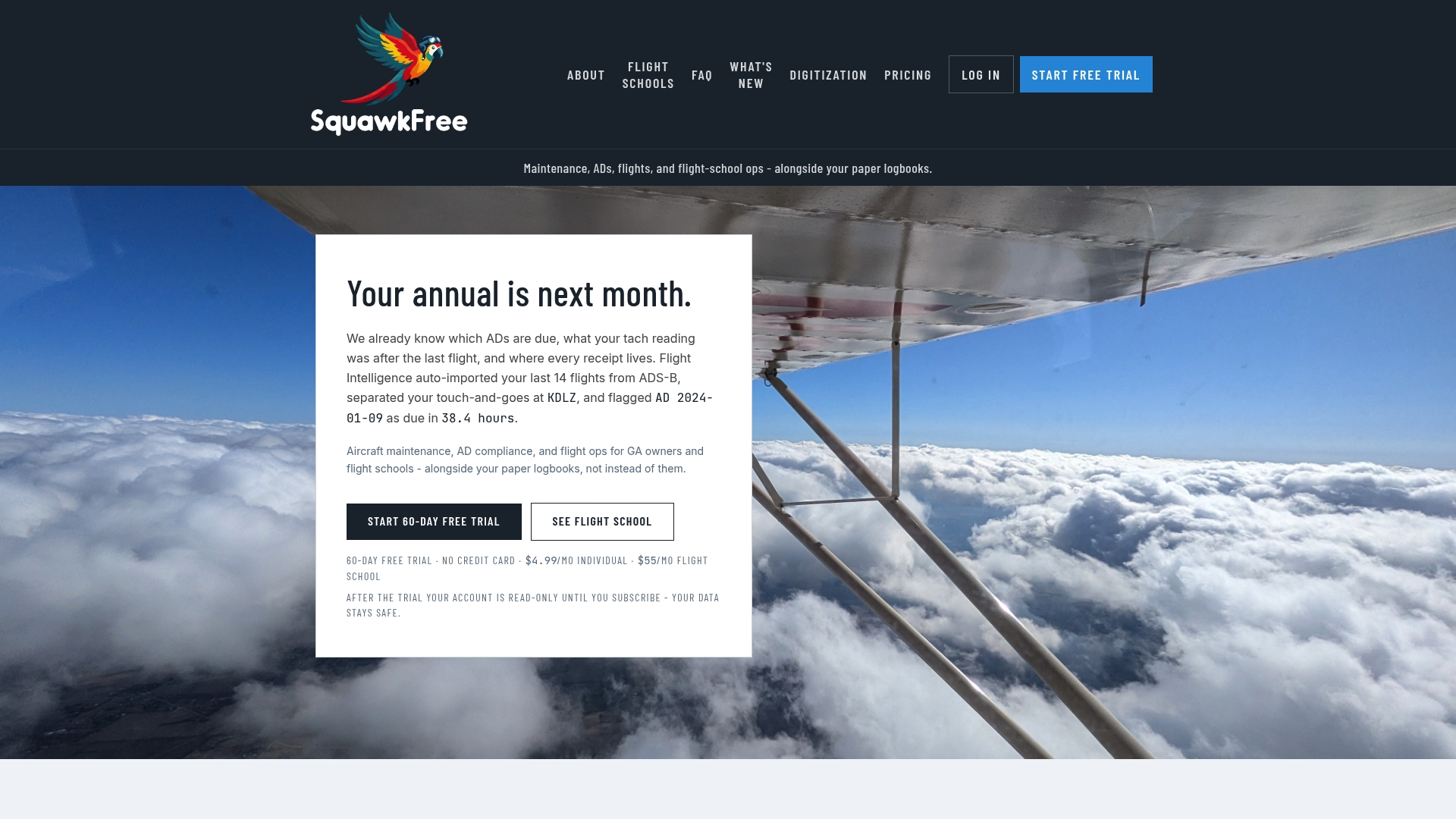
SquawkFree is built specifically for GA owners, co-owners, and flight schools who need that information organized and current without manual digging. Preflight checklists live in the app as reusable templates you complete per flight, so the record of what you checked is dated and consistent rather than remembered. Maintenance logs, AD compliance entries, and open squawks are all in the same place, reachable from a phone browser in the hangar, and the dashboard shows what is due or overdue before you walk out to the aircraft. The optional Flight Intelligence add-on imports flights from ADS-B so the hours behind those due dates stay current with less typing. Flight schools get dispatch tools, scheduling, and billing in the same system. Start your 60-day free trial at SquawkFree and see how much cleaner your preflight prep gets when the data is already there waiting for you.
Key Takeaways
A thorough preflight inspection checklist, backed by current maintenance records and FAA-compliant documentation, is the single most reliable tool for preventing in-flight emergencies in general aviation.
| Point | Details |
|---|---|
| ARROW documents are non-negotiable | Missing or expired documents ground the aircraft regardless of mechanical condition. |
| Segmented checklists prevent missed steps | Breaking the inspection into logical blocks lets you pause and resume without losing your place. |
| Preflight inspection takes 15 minutes to under an hour depending on aircraft type and pilot thoroughness | Never compress this time to meet a departure; complexity and thoroughness are key factors. |
| Advanced Preflight adds a maintenance layer | Reviewing logs and ADs before the walkaround surfaces recurring issues the standard checklist won’t catch. |
| SquawkFree centralizes your compliance data | AD entries, logbook history, open squawks, and dated preflight checklist records sit in one platform you can open from a phone in the hangar. |
Recommended
No credit card required · read-only after trial