
How to Set a No-Show Fee Policy That Actually Gets Followed

How to Set a No-Show Fee Policy That Actually Gets Followed
A working no-show fee policy needs three things: a clear cancellation window (say, 24 hours), a fee that’s predictable and proportionate to what got wasted, and a documented exception path for weather, mechanicals, and instructor conflicts. The goal isn’t punishment. AOPA frames it as recovering real financial losses while nudging students and renters to respect the schedule.
In practice, that core rule takes a few shapes. Some schools charge a flat fee for any no-show under 24 hours. Others bill a percentage of the scheduled block, treating a missed lesson like a shortened one. A third group uses a loss-recovery model: charge exactly what the aircraft and instructor time would have cost had the flight happened. All three work. What fails is having no rule at all, or one nobody reads until they’re disputing a charge.
Key Takeaways
A no-show fee policy works when it pairs a clear, timestamped cancellation window with a proportionate fee and a documented exception path that everyone sees before they ever book a flight.
| Point | Details |
|---|---|
| Set a firm window | Use a tiered structure (72/48/24 hours) so “late” has one clear definition tied to system timestamps. |
| Match the fee to the model | Flat fees suit small clubs; loss-recovery fees suit schools with tight instructor scheduling. |
| Document every exception | Name who approves weather, mechanical, and instructor-unavailability waivers in writing. |
| Automate the enforcement trail | Layered reminders and timestamped logs settle disputes without staff guesswork. |
| Track recovery metrics | Monitor no-show rate and fee recovery rate monthly, and let SquawkFree’s scheduling and billing tools automate the reminders and timestamps. |
Table of Contents
- What Is a No-Show Fee Policy, and Why Does It Matter?
- Core Elements Every No-Show Fee Policy Must Include
- Choosing a Fee Model and Writing the Clauses
- How Do You Enforce a No-Show Policy Without Creating Bad Blood?
- Legal and Fairness Checks Before You Publish the Policy
- A Ready-to-Use No-Show Fee Policy Template
- What Twenty Years of Flight School Scheduling Data Actually Teaches You
- Let SquawkFree Handle the Enforcement Side of Your Policy
- Frequently Asked Questions
- Sources
What Is a No-Show Fee Policy, and Why Does It Matter?
Skip the policy, and you don’t just lose revenue. You lose schedule integrity. An instructor sitting idle at 8 a.m. because a student didn’t call isn’t just a bad morning. It’s a slot another student couldn’t book, a plane that sat cold when it could have flown, and an administrator now chasing a payment nobody agreed to in writing.
A clear cancellation policy fixes that friction at the source. Once renters and students know the rule, they plan around it instead of testing it.
- Schedule reliability: instructors and aircraft get released and rebooked fast instead of sitting on hold.
- Fair allocation: busy students don’t lose slots to renters who book and vanish.
- Fewer last-minute gaps: predictable fees discourage casual cancellations.
- Lower admin friction: staff spend less time chasing “was that a no-show or did they call?”
Community college flight programs back this up with hard rules. WCC’s AM119 policy charges a no-show the same rate as the scheduled flight, flight time plus ground briefing, precisely because unplanned idle time costs the program money it can’t recover otherwise.
Core Elements Every No-Show Fee Policy Must Include
A policy that holds up under a dispute needs more than a fee number. It needs definitions precise enough that nobody can argue about what happened.
Start with scope: does the policy cover students, aircraft renters, instructors booking dual time, or all three? Most schools apply one standard across the board, with instructor-initiated cancellations carrying a separate, no-fault clause.
Next, define your terms in writing:
- Reservation: a confirmed booking in the scheduling system, timestamped.
- Late cancellation: canceled inside the notice window but before the scheduled start.
- No-show: no cancellation received and no contact by the scheduled start time.
- Weather exception: conditions below minimums as determined by the chief flight instructor, not the student.
- Substitute participant: another student or renter who takes the slot, avoiding the fee entirely.
Pick a cancellation window and stick to it. Many operators use a tiered structure: 72+ hours free, 48 to 71 hours a partial fee, 24 to 47 hours a higher fee, and anything under 24 hours or a true no-show billed at full rate. Measure “late” by your scheduling system’s timestamp, not a phone call time the student remembers differently than your front desk does.
Spell out who gets charged what: aircraft rental time, instructor time, or both, and whether deposits or prepaid credits cover part of the fee automatically. Then document the exception and appeal process. Name who approves waivers (typically the chief flight instructor or a program administrator) and how a student requests one.
Pro Tip: Put the policy in three places: the enrollment packet, your website, and every booking confirmation email. A policy nobody saw coming is a policy nobody will pay.
Choosing a Fee Model and Writing the Clauses
Different operations call for different fee structures. A small flying club with three members-only aircraft doesn’t need the same billing complexity as a Part 141 school running six planes and a dozen instructors.
| Model | Best fit | Trade-off |
|---|---|---|
| Flat fee | Small clubs, simple ops | Easy to explain, but doesn’t scale with aircraft cost |
| Percentage of booking | Mixed fleets, varied lesson lengths | Fairer across aircraft types, harder to communicate quickly |
| Loss-recovery (full scheduled rate) | Flight schools with tight instructor scheduling | Matches actual cost but can feel steep for a 30-minute miss |
| Deposit or prepaid credit | High no-show history, new students | Reduces disputes since the fee is pre-collected |
| Graduated repeat-offender fee | Any operation with chronic no-shows | Requires tracking history, adds admin overhead |
A sample rental agreement structure shows this tiered approach clearly: no charge at 72+ hours, a moderate fee at 48 to 71 hours, higher at 24 to 47 hours, and full aircraft plus instructor time for anything under 24 hours or an outright no-show. One club-style example bills a flat $100 cancellation charge plus $25 per reserved hour, and bills instructor time in full when one was scheduled, according to a published member policy document.
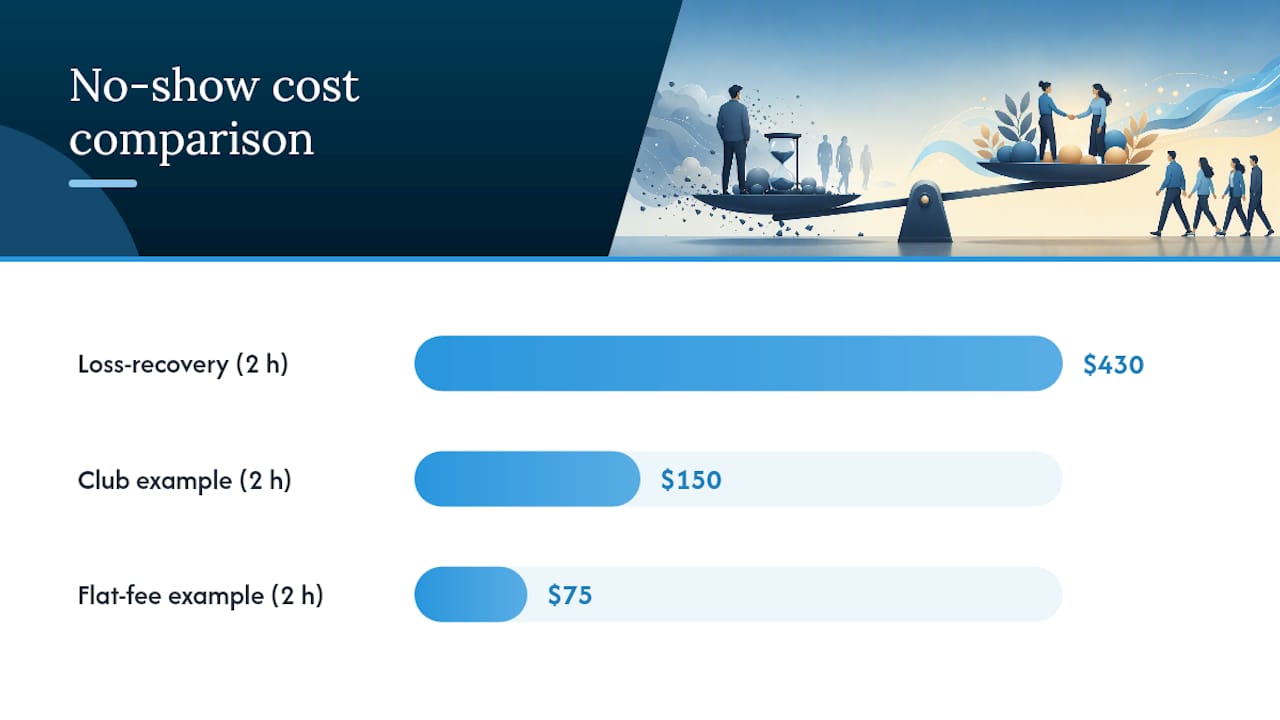
Here’s the math in practice: if your Cessna 172 rents at $150 per hour wet and your instructor bills $65 per hour, a two-hour lesson missed with no notice runs $430 under a full loss-recovery model. Under a flat-fee model, that same miss might cost a simple $75, regardless of aircraft type.
Short clauses you can adapt directly:
- “Cancellations made 24 hours or more before the scheduled time incur no fee.”
- “Cancellations inside 24 hours, or a no-show, will be billed at the full scheduled rate for aircraft and instructor time.”
- “Instructor-initiated cancellations carry no fee and will be rescheduled at priority.”
- “Weather-related cancellations require chief flight instructor confirmation and are fee-exempt.”
- “A substitute participant taking the reserved slot avoids all cancellation fees.”
Pro Tip: Word the fee as a scheduling commitment, not a punishment. AOPA’s guidance on presentation holds up: frame it as “here’s how we keep the schedule fair for everyone,” not “here’s what happens if you mess up.”
How Do You Enforce a No-Show Policy Without Creating Bad Blood?
Enforcement is where most policies die. A well-written clause means nothing if nobody checks the timestamp, sends the reminder, or follows up before the fee becomes a fight.
Here’s the operational sequence that works:
- Disclose it at enrollment. Walk new students through the policy verbally, then follow up in a welcome email with the written version attached.
- Send layered reminders. Confirm at booking, then again at 48 hours and 24 hours out, by SMS and email.
- Timestamp everything. Your scheduling system should log the booking, every reminder sent, and the cancellation or no-show moment automatically.
- Flag and release fast. The moment a no-show is confirmed, release the aircraft and instructor for rebooking, and flag the account for fee review.
- Route approval through one person. A single administrator or chief flight instructor decides whether a fee stands or a waiver applies. No committee, no ambiguity.
- Bill immediately. Charge the card on file or apply the fee to the student’s account the same day, with a clear line item referencing the missed date.
Repeat offenders need tracking, not just billing. Institutional policies commonly escalate from a fee on the first miss to a suspension of booking privileges after repeated no-shows.
- Track your no-show rate monthly (no-shows divided by total bookings).
- Track fee recovery rate (fees actually collected divided by fees assessed).
- Flag any student or renter with two or more no-shows in 90 days for a policy reminder.
A tool like scheduling software built for flight schools can automate the reminder cadence and timestamp logging so disputes come down to a clean record instead of he-said-she-said.
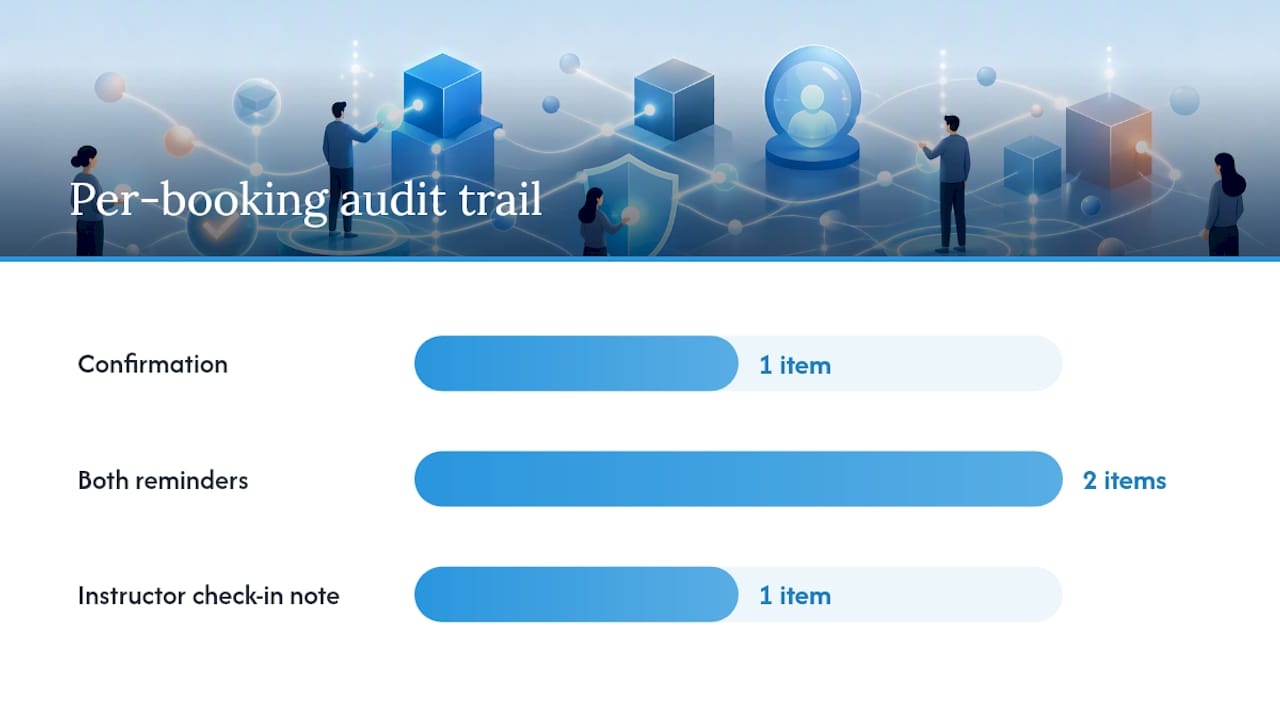
Pro Tip: Build a single audit trail per booking: confirmation, both reminders, and any instructor check-in note. When a fee gets disputed, that trail settles it in one email.
Legal and Fairness Checks Before You Publish the Policy
Three things protect enforceability: consent, clarity, and recordkeeping. Skip any one, and a fee dispute turns into a credibility problem.
Make sure the policy appears in your rental or training agreement, gets shown at enrollment, and rides along in every booking confirmation. Fees should be proportionate and applied the same way to every student, not adjusted case by case based on who’s asking.
Statistic to note: federal aviation rules addressing substitution and refunds cap the administrative fee for a substitution at $25 when a replacement participant is provided. That’s a useful fairness benchmark for your own substitution clause, even outside that specific regulatory context.
Check your state’s consumer protection statutes and your own club or school bylaws before finalizing amounts. Document who can approve waivers and how appeals get filed, then keep every booking record, reminder log, and email on file.
Pro Tip: Retain no-show documentation for at least a full training cycle. If a fee gets challenged months later, you’ll want the timestamped trail, not your memory of the conversation.
A Ready-to-Use No-Show Fee Policy Template
Copy this structure and fill in your own numbers:
“[School/Club Name] requires cancellations at least ___ hours before a scheduled flight or lesson. Cancellations inside that window, or a no-show, will be billed $___ or the scheduled aircraft and instructor rate. Weather or mechanical exceptions require approval from ___ (title). Substitute participants avoid the fee entirely. Waiver requests go to ___ within ___ days of the charge.”
- Scope: who the policy covers
- Definitions: reservation, late cancellation, no-show
- Cancellation windows: your specific hour tiers
- Fees: dollar amounts or rate formulas
- Exceptions: weather, mechanical, instructor unavailability
- Substitutions: how a replacement avoids the fee
- Waivers/appeals: contact person and timeline
- Enforcement billing: how and when the charge posts
What Twenty Years of Flight School Scheduling Data Actually Teaches You
Start lenient, then tighten. A brand-new policy with an aggressive 48-hour window and a steep fee invites pushback before students even understand the reasoning behind it. Give it 90 days at a moderate 24-hour window and a modest flat fee, then adjust based on your actual no-show rate.
Pro Tip: Build a standing weather clause that says, “If you hear nothing from us by [time], plan to fly.” Without that line, students will cancel themselves out of caution, and you’ll eat the fee dispute anyway.
Trent has spent years watching flight schools rewrite their cancellation policies after the first messy dispute rather than before it. A platform like SquawkFree’s scheduling and billing tools removes most of that guesswork by timestamping every booking automatically.
Let SquawkFree Handle the Enforcement Side of Your Policy
Writing the policy is the easy part. Enforcing it consistently, across every student, every renter, every missed slot, is where most operations quietly give up and start making exceptions. SquawkFree closes that gap by turning your no-show rule into an automated workflow instead of a manual chase.
The platform sends automated booking reminders at 48 and 24 hours out, timestamps every reservation and cancellation the moment it happens, and applies fees directly to a card on file or account balance without a staff member opening a spreadsheet. When a dispute comes up, the timestamped log settles it in seconds instead of a back-and-forth email chain. Built-in analytics track your no-show rate and fee recovery rate automatically, so quarterly policy reviews take minutes, not a manual audit.
Check out SquawkFree’s aircraft maintenance and scheduling platform to see how automated reminders and billing integration can take your no-show policy from a document nobody reads to a system that runs itself.
Frequently Asked Questions
What’s a reasonable no-show fee for a flight lesson? Most operators bill either a flat fee or the full scheduled rate for aircraft and instructor time. A club policy example bills $100 plus $25 per reserved hour, while a loss-recovery model simply charges what the missed block would have cost.
How much notice should a cancellation policy require? A 24-hour window is standard for most flight schools and rental operators, though tiered structures with 48 and 72-hour thresholds give more flexibility for partial fees on shorter notice.
Should weather cancellations ever incur a fee? No. A documented weather exception, confirmed by the chief flight instructor rather than the student, should always be fee-exempt. Skipping this creates the most common source of disputes.
Who should approve a no-show fee waiver? One designated person, typically the chief flight instructor or program administrator, should handle every waiver request to keep decisions consistent across students and renters.
Can a no-show fee policy actually hurt student retention? A fee applied fairly and communicated clearly tends to build trust rather than erode it, since students see the same rule applied to everyone. A fee that feels arbitrary or gets waived inconsistently is what damages the relationship.
Sources
- Dealing with no-shows - AOPA
- 14 CFR § 380.32 - Charter passenger protections (substitution/administrative fee language)
- AM119 Flight Cancellation and No-Show Policy
- Aircraft Rental Agreement
- MEMBER POLICIES AND PROCEDURES (Delays & No-Shows)
Recommended
No credit card required · read-only after trial