
TBO Tracking for Maintenance Teams: 6 Step Migration to Audit Ready Records

TBO Tracking for Maintenance Teams: 6 Step Migration to Audit Ready Records
TBO tracking means monitoring flight hours and flight cycles against manufacturer overhaul limits so nothing crosses the line unnoticed. A correct system does three things: it prevents an engine or life-limited component from exceeding its Time Between Overhaul, it flags removals early enough to schedule them instead of reacting to them, and it produces an audit-ready record of every hour, cycle, and swap. Under the hood, that means hours-plus-cycles accumulation, a serial-number ledger, and alerts that convert automatically into work orders.
TL;DR:
- Accurate TBO tracking must log both flight hours and cycles for each component to prevent surprises from unaccounted accumulations.
- Serial-number ledgers are essential to carry over component history during swaps, avoiding tracking errors across different airframes.
- Automated data ingestion from flight telemetry or ADS-B significantly reduces manual entry errors and ensures real-time, audit-ready records.
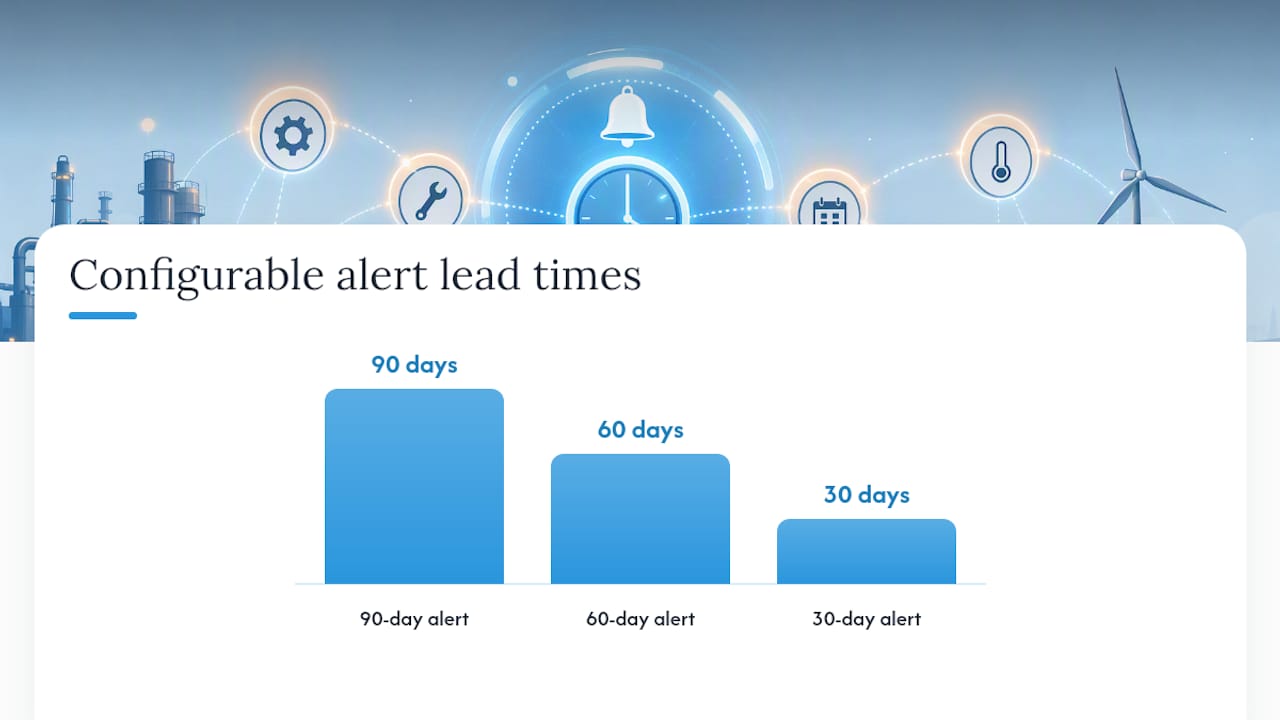
- Setting staged alert thresholds at 90, 60, and 30 days before TBO deadlines supports proactive planning and procurement for timely maintenance.
- Proper documentation of extensions, including regulatory basis and original TBO baseline, is critical for regulatory compliance, resale, and insurance purposes.
Table of Contents
- What a TBO Tracking System Must Actually Do
- How Systems Capture Flight Hours and Cycles
- Turning a TBO Alert Into a Completed Removal
- What Auditors and Regulators Expect From TBO Records
- A Migration Checklist for Implementing TBO Tracking
- What GA Operators Actually Experience With Better Tracking
- What I’d Prioritize First If I Were Rolling This Out
- How SquawkFree Handles TBO Tracking for GA Operators
- Sources
- FAQ
What a TBO Tracking System Must Actually Do
Most operators discover their tracking gaps the hard way, usually right after an engine crosses TBO because someone logged tach time but never cross-checked cycles. A system built for this job has to close that gap by design, not by luck.
The core logic is dual-parameter accumulation. Piston and turbine components age on two clocks at once, flight hours and flight cycles, and whichever parameter reaches its limit first determines the actual removal deadline. A landing gear component might be nowhere near its hour limit but well past its cycle limit from a season of pattern work. Tracking only one parameter is the single most common way operators get blindsided.
A working setup needs to include:
- Dual-parameter accumulation that logs both hours and cycles per component, not per aircraft
- A serial-number ledger that follows the part across airframes, since life follows the part when engines, props, or accessories get swapped between tails
- Configurable alert thresholds, typically staged at 90, 60, and 30 days out, so planning starts well before the deadline
- Automated conversion of alerts into removal work orders, with technician assignment and parts reservation built in
- A permanent audit trail documenting every install, removal, and approved extension with time stamps and signatures
The serial-ledger piece deserves extra attention because it’s where most spreadsheet-based tracking falls apart. If a prop gets moved from one airframe to another, its accumulated time has to move with it. A tracking system that resets or loses that history when a part changes position isn’t tracking TBO. It’s tracking airframes, which is a different and less useful thing.
How Systems Capture Flight Hours and Cycles
Data has to come from somewhere, and the source matters as much as the math. Four sources dominate general aviation: Hobbs meters, tachometers, pilot flight logs, and ADS-B or telemetry feeds. Each has a trade-off. Hobbs time is easy to read but measures oil pressure duration, not actual flight time, so it tends to run slightly high. Tach time correlates better with engine wear at cruise power but can drift at idle. Manual flight logs are flexible but depend entirely on someone remembering to write the number down correctly. ADS-B and onboard telemetry remove the human step entirely, capturing actual flight time and cycle counts automatically.
Integration generally happens one of three ways:
- CSV import, where a maintenance planner uploads a spreadsheet from an existing logbook or ops system
- API connections, which pull structured data on a schedule from flight-tracking or telemetry providers
- Automated telemetry ingestion, where ADS-B or onboard data feeds a maintenance platform in near real time without manual entry
Flight tracking services can supply flight histories that operators use to reconcile hours and cycles against what the maintenance ledger already shows, which is especially useful when a component moves between aircraft and the paper trail is thin. One caution worth noting: not every acronym match is relevant. Some travel and hospitality platforms use “TBO” for entirely unrelated booking APIs, so double-check that any integration you’re evaluating is actually built for ADS-B data import and aviation telemetry, not something else entirely.
Pro Tip: Reconcile a rolling sample of roughly 10 flights per engine each month against Hobbs or tach readings. Small, regular checks catch sensor or logger drift long before it compounds into a multi-hour discrepancy that’s hard to trace back.
Turning a TBO Alert Into a Completed Removal
An alert that just sits in an inbox isn’t worth much. The value shows up in what happens between the first notification and the wrench turning.
Each threshold should trigger a distinct action, not just a louder version of the same message:
- Planning should begin well in advance to confirm the overhaul shop, check parts availability, and flag the removal on the maintenance calendar.
- Procurement should be finalized ahead of time to order long-lead-time parts, reserve tooling, and confirm technician availability for the removal window.
- Scheduling should be locked in early to confirm the exact removal date, block the aircraft on the ops calendar, and stage all paperwork.
The removal work order itself needs specific fields to hold up later: serial number, current accumulated hours and cycles at removal, the shop or technician performing the work, parts consumed, and any deviation from the original schedule. Attach the overhaul facility’s paperwork directly to the record rather than filing it separately, since a scattered paper trail is exactly what turns a routine audit into a slow one.
Procurement lead time deserves its own line item in planning. Piston engine overhauls can involve parts with multi-week lead times, and waiting until the 30 day mark to discover a part is backordered turns a scheduled event into an unplanned grounding. When an extension gets approved instead of a removal, log the approval documentation alongside the original TBO baseline, and initialize the replacement component’s ledger at zero the moment it goes into service. Flight-data analytics that forecast utilization trends give planners more runway here, turning what used to be a deadline into a predictable calendar event.
What Auditors and Regulators Expect From TBO Records
TBO is typically a manufacturer recommendation rather than a federal mandate, and under Part 91 operations, that distinction matters. Operators aren’t automatically grounded the moment an engine crosses its published TBO hour. But “advisory” doesn’t mean “optional to document.” Insurance carriers, resale buyers, and your own safety margin all treat TBO compliance as a real line, even when the FAA treats it as a recommendation.
Auditors reviewing your maintenance records generally look for:
- Serial numbers matched to specific install and removal dates
- Signed, time-stamped logbook entries for every removal and installation
- Accumulated hours and cycles at the moment of each event, not just current totals
- Documentation of any approved extension, including the regulatory basis for granting it
Audit-ready evidence means every one of those items is exportable on demand, not buried across three logbooks and a filing cabinet. When you document an extension, preserve the original TBO baseline alongside the new one. Auditors and future buyers both need to see what the manufacturer originally specified, not just what got approved afterward. Ignoring TBO recommendations entirely can also affect insurance underwriting and resale value, even on airframes that never had a regulatory violation.
A Migration Checklist for Implementing TBO Tracking
Rolling out a new tracking capability, or fixing a broken one, goes smoother with a fixed sequence rather than an improvised one.
- Inventory every tracked component, recording serial numbers, current accumulated hours and cycles, and the applicable TBO limit for each.
- Map data fields between your current records (spreadsheets, paper logs, prior software) and the new system’s structure before importing anything.
- Run a test import on a small subset of aircraft and manually reconcile the results against known-good records to catch mapping errors early.
- Configure alert thresholds at 90, 60, and 30 days, then test escalation paths by simulating an approaching deadline.
- Run a simulated removal end to end, generating the work order, attaching documentation, and exporting an audit report, before touching a live aircraft record.
- Assign a review cadence and an owner. TBO governance drifts fast without someone accountable for checking accumulations monthly and confirming alerts fired correctly.
Flight schools running utilization-heavy fleets benefit from adding one more step: forecasting TBO expiry against annual flight hour trends so overhaul costs get budgeted a year out instead of discovered a month out.
What GA Operators Actually Experience With Better Tracking
Manual TBO tracking usually fails quietly. Someone logs Hobbs time faithfully for months, then a component gets swapped between airframes and the accumulated hours don’t travel with it. Automated flight-data import closes that specific gap by pulling hours and cycles directly from flight activity instead of relying on someone transcribing a number after every flight.
For GA owners and flight schools, the practical benefit shows up in two places: less manual logbook entry, and faster answers when an insurance company or buyer asks for proof of maintenance history. Neither is glamorous, but both are the difference between a five-minute records pull and a weekend spent reconstructing history from memory.
Component life tracking works best when the ledger follows the part, not the airframe, and when hours and cycles get verified against an independent source rather than trusted blindly from a single entry point.
For a closer look at the mechanics behind this, component time tracking and tach time logging both walk through the verification steps that keep GA fleet records accurate between annual inspections.
What I’d Prioritize First If I Were Rolling This Out
Start with your highest-utilization, highest-risk components, not your entire fleet. Trainer aircraft engines and any part with a history of position swaps deserve tracking accuracy before anything else gets attention. Trying to perfect every component ledger on day one is how rollouts stall.
Assign one person as the TBO owner before go-live, and actually test the alert routing with a fake deadline before trusting it with a real one. The mistakes I see most often aren’t exotic: relying on manual Hobbs entry with no cross-check, losing a component’s history during a position swap, and treating parts procurement as an afterthought instead of a 90-day planning item. Fix those three and most TBO surprises disappear.
— Trent
How SquawkFree Handles TBO Tracking for GA Operators
Most flight schools and aircraft owners piece together TBO tracking from a logbook, a spreadsheet, and memory, which works fine until a component gets swapped between airframes or someone forgets to carry cycles forward. Some digital solutions automate parts of TBO tracking to reduce errors manual systems handle worst.

Flight Intelligence pulls flight-hour and cycle data directly from flight activity instead of requiring manual entry after every flight, which is exactly the failure point described earlier in the dual-parameter section. Combined with component ledgers, AD tracking, and shared access for instructors and dispatchers, it maps closely onto the feature checklist this article laid out: accumulation, alerts, and audit-ready history. If your current tracking depends on someone remembering to update a spreadsheet, it’s worth seeing how automated import compares. Start a trial at SquawkFree and check whether your fleet’s TBO records would survive an audit today.
Sources
- What is TBO (Time Between Overhaul)? | Aviation Training Glossary | Aviatize
- TBO Flight Tracking and History - FlightAware
- Engine & Propeller Overhaul Tracking Records: When TBO Is Mandatory vs. Recommended | FileFlo
- TBO (Time Between Overhaul)
FAQ
What Does TBO Stand For?
TBO stands for Time Between Overhaul, the manufacturer-specified interval, measured in flight hours or calendar time, after which an engine or life-limited component should be overhauled.
What Company Is TBO?
TBO isn’t a company in aviation maintenance context. It’s an industry term for overhaul intervals; unrelated businesses in travel and hospitality happen to use the same three letters for different products entirely.
How Does TBO Tracking Work?
A TBO tracking system logs flight hours and cycles per component, checks both against the manufacturer’s limit, and alerts maintenance planners at staged intervals, typically 90, 60, and 30 days before whichever parameter is projected to expire first.
What Is TBO in Aviation?
TBO in aviation is the overhaul deadline set by an engine or component manufacturer, generally treated as a strong planning recommendation rather than a strict regulatory mandate for Part 91 operators.
Do TBO Extensions Require Regulatory Approval?
Extensions should be documented with the approval basis and the original TBO baseline preserved alongside it, since auditors and future buyers both need to see what was originally specified versus what was approved afterward.
Recommended
No credit card required · read-only after trial